
The Real Story of Asian Cricket Lies in Format, Not Geography
एशियाई क्रिकेट का विश्लेषण करते समय 'एशिया' को भौगोलिक लेबल मानना चाहिए, क्रिकेट श्रेणी नहीं। टेस्ट, एकदिवसीय और टी20 के आँकड़े आपस में तुलनीय नहीं होते, इसलिए प्रारूप पहले तय करना अनिवार्य है। क्षेत्र में भारत महाशक्ति है, पाकिस्तान-श्रीलंका-बांग्लादेश मध्य स्तर पर हैं और अफ़ग़ानिस्तान तेज़ी से उभर रहा है। भारत-पाकिस्तान द्विपक्षीय क्रिकेट 2012-13 के बाद से ठप है और मुक़ाबले केवल आईसीसी आयोजनों तथा एशिया कप तक सीमित हैं, जिससे तटस्थ स्थल व्यवस्था जन्म लेती है। व्यावसायिक रूप से आईपीएल का पैमाना बाकी लीगों से कहीं बड़ा है, और नीलामी क़ीमत को खेल-मूल्य का माप नहीं मानना चाहिए। मुख्य जोखिम कार्यभार, चोट-इतिहास और सत्यनिष्ठा निगरानी से जुड़े हैं।
When discussing Asian cricket, the first thing to understand is that Asia is not a cricketing category but a geographic label. Sharjah's flat, batter-friendly deck, Dhaka's slow turning surface, Kandy's seaming morning air and Dambulla's humid afternoons have tactical implications that are directly opposed to one another. There is therefore no single entity called Asian cricket that can be analysed as one. The region contains a superpower in India, three strong mid-tier sides in Pakistan, Sri Lanka and Bangladesh, and an emerging force in Afghanistan. The spread is wide enough that guessing a single tier is meaningless in itself.
The second, more fundamental point is that format is the primitive unit of cricket analysis. Test, ODI and T20 differ in structure: five days, fifty overs, twenty overs. Averages, strike rates and economy rates cease to be comparable the moment the format changes. A strong T20 record cannot be converted into a Test assessment, and a first-class average does not prove anyone is a T20 finisher. India's domestic structure runs the Ranji Trophy, the Vijay Hazare Trophy and the Syed Mushtaq Ali Trophy as three separate competitions, each with its own selection logic. When a report places all three in a single frame to evaluate a player, it is not doing technical analysis but convenience generalisation.
The term strike rate is inherently ambiguous, and that ambiguity produces most errors in reporting. For a batter it means runs per hundred balls, where higher is better. For a bowler it means balls per wicket, where lower is better. Economy rate, runs conceded per over, is the standard constraint metric in T20, while its importance in Test cricket is entirely different. Powerplay and death overs are the two phases in limited-overs cricket where fielding restrictions and run-rate pressure are most acute, and T20 matches are most often decided in those phases. In a rain-affected match the target is revised through the Duckworth-Lewis-Stern method, which is frequently oversimplified and misrepresented.
On the talent-supply side the picture across the region is deeply uneven. India's domestic system is so vast that its fourth and fifth rung of players often have more match experience than the first teams of several countries. This is why every Indian selection debate is naturally intense: there is no shortage of options but an abundance of them, and maintaining continuity within that abundance is the real challenge. The IPL has strengthened this supply chain financially, because a domestic player now gains high-pressure match experience before an international debut. But the same system has a weakness: workload management. The demands of a franchise, a state association and the national team fall on the same player at once.
Afghanistan is the region's most striking structural story. It received full ICC membership in 2026, and since then has not merely increased participation but recorded results in major tournaments. Beating England, Pakistan and Sri Lanka at the 2026 ODI World Cup, and reaching the semi-final of the 2026 T20 World Cup, is proof of capability. The important feature of that rise is that it rests mainly on spin-based bowling and disciplined collective cricket, which is especially effective on neutral and slow surfaces. Rashid Khan sits at the centre of that system, but the team's real strength is that it has turned the limits of its resources into part of its strategy.
Bangladesh is the mirror image. Talent keeps arriving and a domestic structure exists, yet performance in the decisive moments of big matches often collapses. This is attributed less to technical deficiency and more to a lack of mental and structural continuity. A player like Shakib Al Hasan maintained balance across all three departments for a long period, but such dependence on a single individual is itself a risk. Sri Lanka, meanwhile, is passing through a rebuilding phase in which aligning experienced hands such as Kusal Mendis with a new generation is the central challenge. All three teams share a trait: strong in home conditions, unstable the moment they travel.
The region's biggest structural feature is the near-frozen state of bilateral cricket between India and Pakistan. Pakistan's tour of India from December 2026 to January 2026 was the last bilateral series; since then the two sides have met only in ICC events and the Asia Cup. That is a political decision, not a sporting one, and it lands directly on the commercial structure. A single match between the two raises broadcast audiences and advertising rates several times above any other bilateral fixture in the world. The match that happens least often is the most economically valuable, and that contradiction sits at the centre of the region's economy.
This is why neutral-venue arrangements emerge. The 2026 Asia Cup was played under a hybrid model, with some matches in Pakistan and the rest in Sri Lanka. Such arrangements are not merely technical solutions but an admission that hosting rights and political consent cannot be separated in this region. A neutral venue also has a direct sporting effect: without a home crowd, pitch preparation, toss strategy and pressure management all change.
On the commercial side, the concentration of capital gives the clearest picture. The IPL expanded to ten teams in 2026, and its media rights for 2026 to 2027 sold for roughly 48,000 crore rupees, a figure that by itself shows the ratio between the purchasing power of the Indian domestic market and that of smaller leagues. The Pakistan Super League, ILT20, the Lanka Premier League and the Bangladesh Premier League are smaller but significant parts of the same ecosystem. Their role is dual: they give players a livelihood and a stage, and they strengthen the control of national boards, because a No Objection Certificate for playing in a foreign league is issued by the board.
One valuation principle is worth keeping in mind: an auction price is not a direct measure of a player's international sporting value. Auction value is the product of demand, availability, team structure, retention rules and mechanisms such as the Right to Match, and it is volatile season by season. The same player's price can multiply within two years while his technical level does not change at that speed. Presenting auction numbers as performance evaluation is therefore a basic category error.
At the governance level, the oldest argument in this region concerns ICC revenue distribution. The 2026 model, which gave India, Australia and England a larger share, drew prolonged debate and was revised in later years. The substance of that argument is less about sporting policy and more about financial control, which is why the issue stays alive for smaller boards over years. In parallel, the Asian Cricket Council structure runs regional events, but its decision-making power depends on the consent of member boards. On the laws of the game, powerplay structure, slow over-rate penalties and new-ball regulations remain in continuous discussion, because every rule change shifts the strategic balance directly.
Ignoring the risk side is the region's most common mistake. The first risk is workload: a dense calendar of national team, franchise and domestic commitments has a direct effect on players' bodies, and fast bowlers are affected first. The second is injury history, which is often kept outside the data even though any long-term evaluation is incomplete without it. The third is integrity: monitoring by the ICC's anti-corruption unit remains continuously active, and this subject demands caution. Presenting any suspicion as fact is unfair, but assuming the monitoring apparatus is absent is a bigger error still.
The essence of all this is that there is no single truth about Asian cricket. There are three separate formats, at least five separate commercial scales and mutually clashing political interests. So the next time a report claims Asian cricket is getting stronger or weaker, three questions should come first: which format, which team, and on what basis. Until those three answers are clear, any conclusion will rest more on inference than on data.
संबंधित खिलाड़ी
लोकप्रिय/पसंदीदा पुस्तकें
Shadows of Hormuz: Oil Prices, War Fears and Cricket's Uncertainty in the Gulf2026-11-04
Empty Data, Empty Conclusions: Auditing the Analytical Gap That Cricket's Commentators Never Count2026-11-03
The Empty Parse and Cricket's Silence: When the Biggest Story in Analysis Is the Absence of Analysis2026-11-03
Empty Payload, Complete Framework: The Null Result of a Cricket Analysis and What It Actually Costs2026-11-03
Asia's T20 Sickness Isn't in the Death Overs — It's in the Emptiness of Overs 7 to 152026-11-03
Asian Cricket's New Era: The Search for Balance Between Calendar, Capital and Competition2026-11-03
Sammy's 'Wariness' and Hosts' Silence Before Sylhet Test: Who Holds the Edge After Mirpur Defeat?2026-11-03
अनुशंसित
The Sooryavanshi-Samson Debate: A 228.26 Sample and the Wellington Wind2026-10-28
The Pink Jersey Calendar: What PCB Changed in Lahore, and What It Didn't2026-10-26
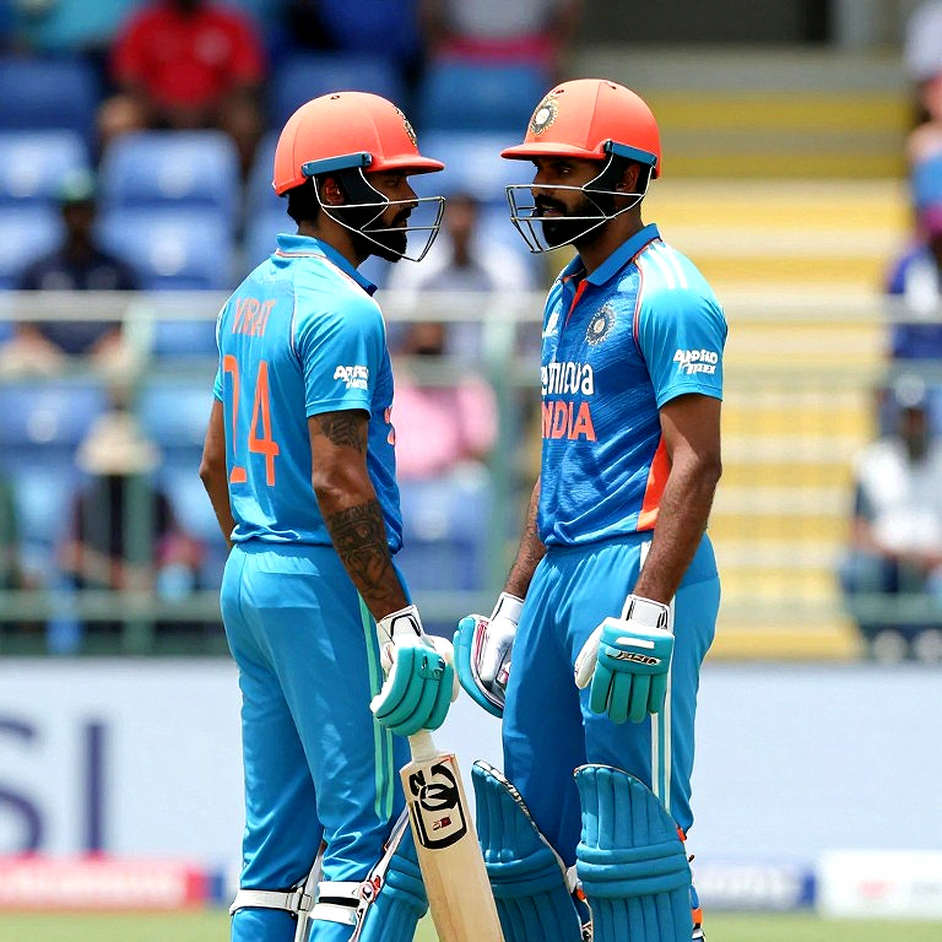
Kohli-Rohit banter at Eden Park nets after net bowler asks for a bat — but the real story of this tour is the pace attack2026-11-03
The Christchurch Phase Audit: Tilak Varma's 130.77-to-261.54 Finishing Model, and New Zealand's Unfinished Platform2026-10-25
Rabada's 350th Wicket and Australia's Newlands Collapse: South Africa Seal Series 2-12026-11-02
cricket_asia: One Empty File and the Whole Calendar Behind It2026-10-29
The File With Empty Columns: The Asia Cup's Ledger Is Smaller Than Its Broadcast2026-11-01
अनुशंसित
The Empty Table: When a Cricket Data Desk Is Left With a Single Label2026-11-01
The Empty Column of the Asia Cup: What Asian Cricket Records and What It Doesn't2026-11-02
Asia's T20 Sickness Isn't in the Death Overs — It's in the Emptiness of Overs 7 to 152026-11-03
Five Points, Three to Go: What Lahore's 46th Over Left Off the Scoreboard2026-10-29
One Field in IRIS: What the Tax Bar Association Has Asked the FBR to Fix for Behbood, Pension and Shuhada Account Holders2026-10-26
अनुशंसित
111 at Newlands: South Africa's Return to No.1 and Rabada's 13,808-Ball Line2026-11-01
Riyadh's Airports, Dubai's Ground: Cricket Has One Backup Plan, and It Sits in the Gulf2026-10-26
Cricket on the Scorecard, Regulation R-6 in the Nets Log: A Forensic Audit of Eleven Information Points2026-10-30
Vaibhav Sooryavanshi Missing the 4th T20I Is Not a Dropping — It Is a Reversion to the Pecking Order2026-10-30
Sovima's 400*: Sutar's innings is history, but the rest of the scorecard stays silent2026-10-22
D3 Trophy Auction: Tanjid's Two Crore Points, Mustafizur's Seventy Lakh, and the Real Arithmetic of Bangladesh Cricket2026-10-30
Rahane's All-Time Test XI: The Error Isn't in the Names, It's in the Missing Filter2026-10-30