
Cricket's New Era: How Data, Technology and Market Forces Are Reshaping the Game
क्रिकेट अब केवल मैदान का खेल नहीं, डेटा और तकनीक का भी खेल है। बॉल-ट्रैकिंग और DRS ने अंपायरिंग को बदला, फेज़-वाइज विश्लेषण (पावरप्ले, मिडिल ओवर, डेथ ओवर) ने खिलाड़ी मूल्यांकन को सटीक बनाया, और फ्रेंचाइज़ी लीगों ने क्रिकेट की अर्थव्यवस्था को नया आकार दिया। विश्व टेस्ट चैंपियनशिप ने टेस्ट क्रिकेट को प्रतिस्पर्धी ढाँचा दिया, जबकि 2028 लॉस एंजिल्स ओलंपिक में क्रिकेट की वापसी वैश्विक विस्तार की दिशा में बड़ा कदम है। साथ ही खिलाड़ी वर्कलोड, मैच-फिक्सिंग का खतरा और ब्रॉडकास्ट राजस्व का असंतुलन तीन बड़ी चुनौतियाँ हैं। सबसे अहम सबक: बाज़ार मूल्य और खेल मूल्य एक नहीं होते — नीलामी की बड़ी रकम किसी खिलाड़ी की अंतरराष्ट्रीय श्रेष्ठता साबित नहीं करती।
Cricket has been called a game of numbers for decades, but until the late twentieth century those numbers were largely backward-looking: who scored how many, who took how many wickets, whose average was better. They had limited use in deciding what to do next. Over the past two decades that picture has inverted. Data no longer looks only backwards; it tries to look forward — what might happen in the next over, which line will trouble which batter, and which player's market price is far above his actual cricketing value.
This shift is not only technical. It is economic, administrative and cultural. High-speed cameras measure the speed, spin and bounce of every delivery; ball-tracking technology reviews umpiring decisions; algorithms help shape franchise auction strategy; and broadcast-rights auctions can move the economics of an entire national sport. Cricket is now played not only on the field but on screens, in spreadsheets and in boardrooms.
One game, three different logics
Cricket's biggest analytical complication is that it is not one game but at least three. Test cricket's logic rests on patience, session-by-session attrition and long-range planning. One-day cricket hinges on changing tempo within 50 overs. T20 gives every ball a distinct value, because a single over can flip a match.
This means the benchmarks must differ too. A batter averaging 40 is highly valuable in Tests, while in T20 a batter striking at 140 may be a drain — even with a respectable average. Likewise a fast bowler who can send down 20 overs in a Test becomes a four-over 'impact bowler' in T20.
Confusing these registers is the most common error in cricket analysis. A statistic from one format is routinely transplanted onto another and the result is misleading. A good analyst first asks: which format, which conditions, which phase. Until those three are clear, no number means anything on its own.
From scorecards to analysis
Cricket's formal analytical history is long, but its modern form grew from two streams. The first is statistical record-keeping — scorecards, averages, strike rates, historical comparison. The second came from sabermetrics: using data to measure aspects of the game that never appear in a conventional scorecard.
In baseball, Bill James's work and the Moneyball approach showed that markets often pay for the wrong things — for decorative statistics rather than genuine contribution to winning. Cricket absorbed this later, but when it did, it changed everything from auction strategy to field placement.
Today cricket analysis works on three layers: descriptive (what happened), diagnostic (why it happened) and predictive (what might happen next). The third is the most attractive and the most hazardous, because cricket's samples are small and uncertainty is large.
Powerplay, middle overs and death overs
The most practical way to understand T20 is to divide it into three phases. The first six overs — the powerplay — allow only two fielders outside the inner ring; batters attack and bowlers exploit the new ball. The middle overs, seven to fifteen, are the phase of spin and strike rotation, where losing a wicket is costliest. The last five, the death overs, are where every ball carries risk.
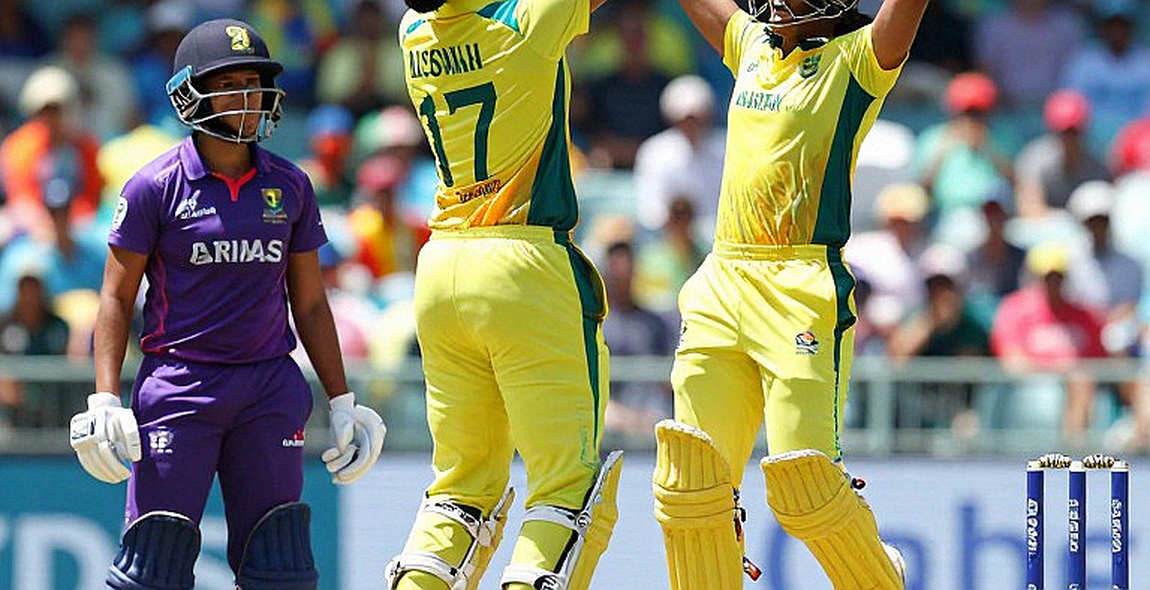
Phase-wise analysis means a single strike rate is not enough. You must see how a batter performs in each phase. An opener may strike at 150 in the powerplay but shrink to 110 at the death — such a player must be used contextually. Some bowlers are lethal with the new ball but expensive at the death. The right question is not who is 'better' but who suits which phase.
Average versus strike rate
The tension between average and strike rate is cricket's oldest argument. Average measures how long a batter lasts; strike rate measures how fast he scores. In Tests, surviving is the primary skill, so average dominates. In T20, survival is not valuable in itself — 30 off 30 balls before getting out can be a net loss.
Modern analysis goes further, into situational splits. How does a batter behave when the team is 40 for 3? When the target is steep and the bowling is quick, does he take risk or retreat? These questions say far more than an average does.
There is another layer: opposition quality. A player's raw numbers do not reveal whom those runs came against. Analysts therefore move toward weighted figures, where performances are valued by the strength of the opposition and the stakes of the match.
The sample-size question follows. Declaring greatness on the basis of one T20 league season is the most common excess in cricket analysis; confidence built on small samples usually breaks the following season.
Bowling: beyond economy
Economy rate is the traditional bowling benchmark, but in T20 it is not sufficient alone. A bowler going at eight an over while taking three wickets may contribute more than the raw figure suggests. Analysts now look at dot-ball percentage, boundary-concession rate and the context of wickets.
Dot balls have gained importance because building pressure can be more effective than simply conceding fewer runs. Two or three consecutive dot balls force the batter to take risk, and wickets follow. Some analysts build 'pressure indices' to measure how much pressure a bowler created in a given over.
Spin is more complicated still. A spinner's output depends heavily on the pitch, the weather, the time of day and the strength of the opposing batting line-up. The same bowler can take three for 20 at home and take nothing abroad in identical form. Spin figures must therefore be split into home and away, powerplay and middle.
For fast bowlers, new-ball wickets, death-over economy and workload are separate metrics. A fine overall economy figure does not reveal how a bowler fared specifically at the death — and in modern cricket, death bowling is the most expensive skill of all.
Technology's influence: from DRS to ball-tracking
Technology has changed cricket's decision-making in a way rare in sport. Under the Decision Review System, ball-tracking projects the trajectory of the ball, UltraEdge detects contact between bat and ball, and replay systems check the validity of catches. The margin that decides whether an umpire's call is overturned or upheld is set by the technology's error band — the 'umpire's call'.

The technology cuts both ways. It increases fairness and earns player trust; it also slows the game and produces disputes where technology and human judgement collide. The umpire's call has long been debated — some see it as a technical compromise, others as a way of preserving the umpire's authority.
Zing bails, stump cameras, heat maps and biomechanical analysis are now routine. Injury management uses workload tracking and pace analysis. Bowling-action biomechanics is used both to prevent injury and to enforce the rules.
But technology has a limit: it measures what it is told to measure. Leadership, mental resilience under pressure, dressing-room chemistry — none of these appear in a camera. Cricket's most important part remains unmeasured, and probably always will.
Test cricket and the World Test Championship
Test cricket was long described as a format in decline, especially once T20 leagues filled the calendar. The World Test Championship was the answer to that worry — binding Test matches into a championship structure to give them competitive meaning.
The WTC also changed Test analysis. Every series now carries points, which has shifted team strategy; some sides take more risk in pursuit of wins, since a draw now offers less reward. It has made Test cricket somewhat faster and more decisive.
The WTC has critics too. Teams do not play equal numbers of matches, so the points table remains uneven. The diversity of home pitches and the balance of opposition strength are also contested. Yet the WTC has given Test cricket a framework that has drawn audiences back, and made the final a major occasion.
In Test analysis the essentials remain traditional — use of the new ball, first-innings score, pitch deterioration and fourth-innings pressure. Data can illuminate these better, but no model replaces them.
The IPL and franchise economics
The Indian Premier League permanently altered cricket's economic architecture. Launched in 2026 with eight teams, it is now one of the most valuable properties in world cricket and has ten teams since 2026. Its influence extends beyond Indian cricket into the global calendar and player incomes.
Franchise economics rests on three pillars: broadcast rights, sponsorship and ticketing/merchandising, with broadcast the largest. When rights values rise, franchise valuations rise and auction spending capacity rises. This cycle underpins cricket's trickle-down model.
But a basic distinction must be understood: market value and sporting value are not the same. A large auction price does not prove a player is the best internationally. Prices inflate for many reasons — local population, team need, contract length, scarcity in a given year, or panic bidding.
The auction: skill versus market price
Auctions are cricket's most interesting economic experiment, where supply and demand meet psychology. A team that misses the big names early may later overspend on an ordinary player out of necessity — a panic premium.
Some categories carry a natural premium: fast bowlers effective at the death, wicketkeeper-batters who accelerate in the middle order, and multi-skilled all-rounders. All three are scarce, hence expensive. Rules such as the Right to Match allow former franchises to retain released players and complicate auction dynamics further.
Overseas-player quotas and availability also move prices. With only a limited number of overseas players permitted in the XI, teams must balance composition — a cheaper option can outperform an expensive one if he fits the structure. Here analysis, strategy and market intersect.
Broadcast rights and revenue politics
Cricket's money comes mainly from television and digital rights. The Indian board holds the largest share of global cricket revenue, because India has both the largest audience and the largest sponsorship market. This is why ICC revenue distribution is periodically contested — some member boards consider it imbalanced.
This debate is about power as much as money. Whoever holds the larger revenue share also holds influence over the calendar, the rules and hosting. For smaller boards it becomes a question of survival, since their domestic markets are limited and they depend on ICC distribution.
The rise of digital rights adds a new dimension. Streaming platforms now bid more aggressively than traditional television, changing both audience habits and the advertising market. The effect extends beyond cricket to the entire sports-broadcasting industry.
Player workload: the war between injury and calendar
Cricket's calendar is now so crowded that managing players has become a separate science. A international cricketer faces Test series, limited-overs series, franchise leagues and domestic competitions running simultaneously. The direct result is a higher injury rate.
Fast bowlers are most exposed. Continuous cricket brings stress fractures, side strains and knee problems. Batters commonly suffer finger and wrist injuries, especially against seam and bounce. All-rounders carry a double load.
Workload management is therefore a priority for every team. Some players are rested for selected series, others restricted format-wise. This strategy sometimes creates controversy — when a leading player rests from an international series but plays a league, fans and boards both raise questions.
The structural problem underneath is this: boards control the international calendar, but a large share of the income comes from leagues. The player is caught between them. The answer will come not from rules alone but from better calendar planning.
Home advantage, pitches and conditions
Home advantage is the most underrated factor in cricket analysis. Every pitch differs — some quick and bouncy, some slow and spin-friendly, some where dew becomes decisive. The host team knows these conditions intimately and selects accordingly.
Three things matter in reading a pitch: the surface, the weather and the ground's dimensions. On a quick pitch the new-ball bowlers dominate; on a slow one, spinners and patient batters. Where dew is a factor, batting second becomes easier, raising the value of the toss.
This is why any result must be read with the toss, weather and pitch separated out. Sometimes a large margin comes not from skill but from conditions. Ignoring that is neither fair nor good analysis.
South Asia: cricket's economic heart
Global cricket's economic centre is clearly in South Asia. India leads in audience, sponsorship and revenue; Pakistan, Bangladesh and Sri Lanka are large and rapidly changing markets. In this region cricket is not merely a sport but part of social and political identity.
One consequence is that fixtures such as India–Pakistan bilateral series have long been stalled for political reasons, making their meetings at ICC events the biggest draw. Another is that player mobility and league expansion connect the region's economies.
But there are risks in this centrality. If a large share of revenue continues to come from one market, global cricket's financial stability will depend on that market. Expanding cricket into new markets — especially the United States and Europe — has therefore become a strategic necessity for the ICC and member boards.
Betting, fantasy and integrity
Commercial expansion brought a serious challenge: the threat of match-fixing and spot-fixing. The 2026 allegations against a South African captain, the 2026 spot-fixing case involving Pakistani players and the 2026 IPL spot-fixing episode all show that where the money is large, the risk is large.
The ICC's Anti-Corruption Unit monitors these threats — suspicious betting-market movement, unusual bowling or batting patterns, and players' contacts. Reporting obligations are mandatory for players: any suspicious approach must be disclosed.
The rise of fantasy sports has complicated the picture further. It is legally distinct from betting, but its economic scale has grown so large that calls for regulatory clarity are increasing. Some countries ban it, others regulate it. For cricket, this is an area demanding both transparency and oversight.
LA 2028 and the road ahead
Cricket's inclusion in the 2028 Los Angeles Olympics is a major step in the game's global expansion. Cricket returns to the Olympics after roughly 128 years — it was last played at Paris 2026. The T20 format gives the sport a chance to reach countries where it is not yet mainstream.
The effect could cut both ways. It may attract investment and audience interest in new markets; it may also densify the calendar further, sharpening the workload question. Olympic preparation requires time, and that time must come from somewhere.
The rapid growth of women's cricket belongs to the same story. The Women's Premier League and other women's franchise leagues have given players a new platform and financial security. Audience and sponsorship are both rising, and this is the most promising area of global expansion.
Conclusion
Cricket is in transition. On one side, data and technology have made the game more precise, more planned and more professional. On the other, those same forces are stripping away some old pleasures — the joy of uncertainty, the ease of instinct on the field, the player's own intuition.
The real challenge is balance. Data should be a tool for decisions, not a substitute for them. Technology should increase fairness, not kill the game's pace. The market should enrich the sport, not sell its soul.
Cricket's beauty is that it is uncertain. No model, no algorithm, no camera can say what happens off the next ball. And perhaps that is why millions still sit before a screen waiting for that one delivery.