
Asian Cricket's Three-Tier Structure: One Continent, One Market, and Everyone Else
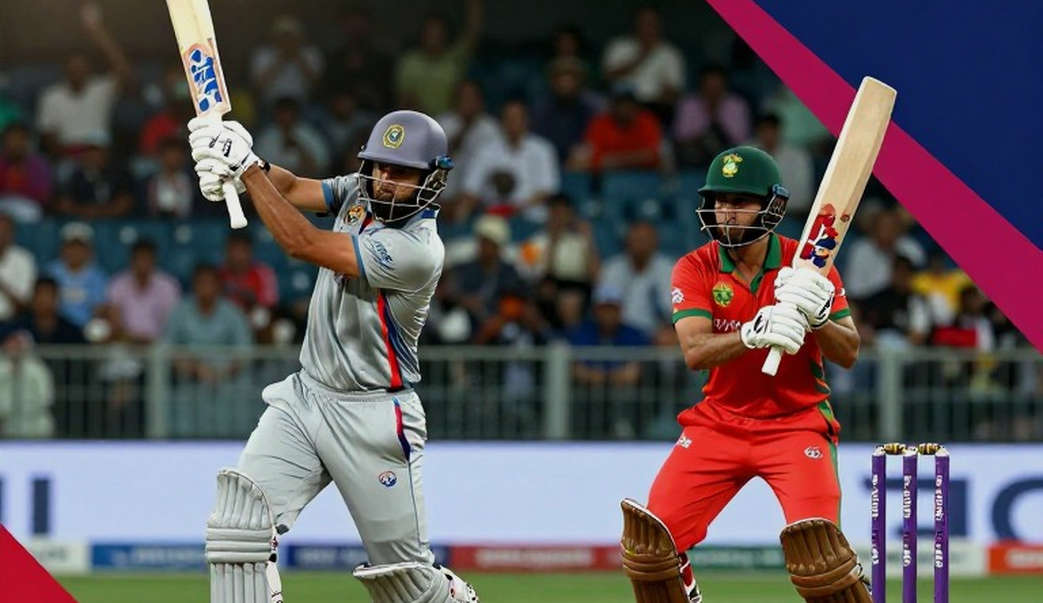
एशियाई क्रिकेट तीन स्तरों में बँटा हुआ है। पहला स्तर भारत का है, जहाँ आईपीएल के 2023-27 मीडिया अधिकार लगभग 48,390 करोड़ रुपये (करीब 6.2 अरब डॉलर) के हैं और आईसीसी राजस्व में भारत का हिस्सा करीब 38.5 प्रतिशत है। दूसरा स्तर पाकिस्तान सुपर लीग, बांग्लादेश प्रीमियर लीग, लंका प्रीमियर लीग और यूएई की आईएलटी20 का है, जो सीमित बाज़ार आकार और वित्तीय अस्थिरता से जूझते हैं। तीसरा स्तर अफगानिस्तान और नेपाल जैसी उभरती टीमों का है — अफगानिस्तान 2024 टी20 विश्व कप के सेमीफ़ाइनल तक पहुँचा, पर इनके पास स्थायी आय-मॉडल नहीं है। मुख्य तनाव-बिंदु हैं: एनओसी पर बोर्डों का नियंत्रण, कैलेंडर अतिभार, तटस्थ मैदानों की ओर टूर्नामेंटों का खिसकाव और महिला क्रिकेट में असमान विकास। निर्णय-शक्ति मुख्यतः बीसीसीआई के नेतृत्व वाली एशियाई क्रिकेट परिषद के पास है।
The most common mistake in discussing Asian cricket is to treat it as a single, homogeneous entity. It is not. It is a market running three distinct tiers simultaneously: at the top, India's near-monopoly; in the middle, the struggling domestic leagues of Pakistan, Bangladesh and Sri Lanka; and at the bottom, fast-rising but under-resourced sides such as Afghanistan and Nepal. The calendars, capital and politics of these tiers are interlinked, but their interests are not aligned on every front. That asymmetry is the real story of Asian cricket.
The Asia Cup is the cleanest illustration. The 2026 edition used a hybrid model: Pakistan hosted four matches while the rest of the tournament was played in Sri Lanka. That arrangement was born of diplomacy, not sporting logic. India beat Sri Lanka by ten wickets in the final, with Mohammed Siraj's six for 21 proving decisive. Yet much of the tournament's coverage centred on hosting politics rather than cricket.
The Asian Cricket Council is the administrative hub of this structure, but its funding and decision-making capacity flow largely from the Board of Control for Cricket in India. That is why the venue, broadcast rights and calendar window of the Asia Cup are, in practice, settled by Indian interests. The dominance is contestable, but it is also the basis of the tournament's financial viability, because the largest revenue source in Asian cricket is the Indian viewer.
For 2026 the Asia Cup was slated for the United Arab Emirates. This points to a broader trend: major Asian tournaments are drifting towards neutral venues. The UAE offers low logistical and weather risk, and easier security management for high-tension fixtures such as India against Pakistan. But there is a cost. A neutral venue dilutes home engagement. A tournament played on neutral soil is safe for organisers, not necessarily good for the game.
The Indian Premier League is the economic axis of the continent. Media rights for the 2026-27 cycle sold for roughly 48,390 crore rupees, close to 6.2 billion dollars, the largest broadcast deal in any cricket league. That figure is not merely the value of sport; it is a direct reflection of India's advertising economy. Calling the IPL a league can therefore be misleading. It is, in substance, a media-rights business in which cricket is the product.
On the field, the 2026 season delivered a historic turn. Royal Challengers Bengaluru won their maiden title by beating Punjab Kings in the final at Ahmedabad, ending an 18-season wait. Individually, Gujarat Titans' Sai Sudharsan took the Orange Cap with 759 runs, while RCB's Prasidh Krishna claimed the Purple Cap with 25 wickets. These numbers show that the league is no longer just a stage for overseas stars but the primary testing ground for domestic talent.
The IPL's influence extends well beyond ten franchises. It compresses the domestic first-class calendar, reshapes state associations' priorities and determines the career paths of young players. For a 19-year-old, visibility at the auction now matters more than sustained Ranji Trophy output. That incentive structure is a quiet risk to the longer format, and Indian selectors are well aware of it.
The Pakistan Super League is the strongest example of the second tier. The six-team league is admired for its player base and fan culture, but its finances have remained under persistent pressure. On overseas player availability, broadcast revenue and sponsorship income, it trails the IPL by a wide margin. The consequences show up in central contract policy, where league earnings remain the single largest safety net for domestic players.
The Bangladesh Premier League and Lanka Premier League tell a harder story. Both have grappled with franchise financial instability, payment delays and overseas players withdrawing mid-season. Bangladesh and Sri Lanka both have strong domestic traditions, but the market is too small for the leagues to cover their costs. The result is that top players from these countries depend on overseas leagues for income.
By contrast, ILT20 has validated a different model. Played in the UAE in the January window, it leans on expatriate audiences and a tourism-linked market. Its success metric is not domestic talent development but broadcast and sponsorship. That raises the question of whether such leagues are the future of Asian cricket: financially sustainable, but shallow as development vehicles.
The most contentious administrative issue in all of this is the No Objection Certificate. National boards decide which overseas leagues a player may enter and which he may not. In practice, that control is justified sometimes as workload management, sometimes as national-team priority. Player associations and agents regard it as direct interference with freedom of earnings. The friction will sharpen in the coming years, because the number of leagues is rising while the available windows remain limited.
Calendar pressure falls hardest on players who feature in all three formats. For a frontline fast bowler, combining the IPL, international tours, domestic tournaments and overseas leagues across a single year is physically implausible. Workload management is now a formal part of selection, and boards openly rest frontline bowlers for certain tours. It is necessary, but it directly erodes the commercial value of bilateral series.
The most positive story in Asian cricket is Afghanistan. By reaching the semi-final of the 2026 T20 World Cup, Afghanistan demonstrated that a side with limited resources can still be structurally strong. Players such as Rashid Khan, Rahmanullah Gurbaz and Ibrahim Zadran are now regulars in global leagues. Afghanistan's model is distinctive: its base is not a domestic stadium economy but diaspora training centres and league experience.
Nepal is the second example. By qualifying for the 2026 T20 World Cup, Nepal showed that associate members can reach the biggest stage, with players such as Sandeep Lamichhane making their mark. But Nepal's real challenge mirrors Afghanistan's: limited international fixtures, a thin domestic structure and uncertain funding. The Asian Cricket Council has no durable revenue model for these teams.
Women's cricket is the fastest-growing segment on the continent. The Women's Premier League opened a new professional market from 2026, and India won the 2026 Women's Asia Cup. Yet growth is uneven: outside India, Australia and England, full-time contracts for women remain the exception. Pakistan and Sri Lanka have improved, but neither has a domestic platform comparable to the WPL.
Globally, India's share of the ICC revenue distribution model is around 38.5 per cent, the highest of any member. That single number explains the power structure of Asian cricket. When such a large share of total income originates in one market, decisions bend towards that centre. Whether the arrangement is sustainable is a separate debate, but it is the reality, and any analysis must begin there.
Associate members — Oman, the UAE, Hong Kong, Malaysia, Singapore — sit in a different position. They have neither large audiences nor long domestic calendars. Their achievements are largely confined to T20 qualifiers and the Asia Cup qualification route. In these countries cricket is primarily a diaspora sport, which is both its strength and its ceiling.
On governance, transparency remains the weakest link. The composition of selection committees, the terms of contracts and dispute-resolution processes across Asian boards are often not public. This is not merely an administrative issue: opacity also weakens anti-corruption oversight. The ICC Anti-Corruption Unit's role matters, but domestic accountability matters just as much.
The risk list is clear. First, calendar overload, driving injury and mental fatigue. Second, financial concentration: a significant downturn in the Indian market would hit the entire Asian cricket economy. Third, political instability, with India-Pakistan relations shaping the schedule of every multi-nation event. Fourth, talent drift, as players from smaller boards lean towards leagues and away from the longer format.
Broadcast markets are shifting. Digital rights are now more valuable than television, and mobile-first audiences form the largest share of viewership. This hurts smaller leagues, which lack the leverage for multi-platform deals. The IPL, by contrast, has extracted maximum value by selling its rights in separate packages.
The conclusion is that Asian cricket is a successful market whose success is unevenly distributed. At the top, capital, audiences and talent are all present. In the middle, leagues are fighting for identity. At the bottom, teams such as Afghanistan and Nepal are advancing on the field without a durable revenue path. Any conclusion that ignores this asymmetry will be incomplete.
The way forward is structural rather than technical. The Asian Cricket Council needs a revenue-sharing model that gives smaller members predictable income, and boards need clear, written rules on NOCs and calendars. Until then, Asian cricket will remain a three-tier market trading on the name of a continent, with the gap between the top and the bottom widening every season.

संबंधित खिलाड़ी
लोकप्रिय/पसंदीदा पुस्तकें
Empty Payload, Complete Framework: The Null Result of a Cricket Analysis and What It Actually Costs2026-11-03
Asia's T20 Sickness Isn't in the Death Overs — It's in the Emptiness of Overs 7 to 152026-11-03
Asian Cricket's New Era: The Search for Balance Between Calendar, Capital and Competition2026-11-03
Sammy's 'Wariness' and Hosts' Silence Before Sylhet Test: Who Holds the Edge After Mirpur Defeat?2026-11-03
India A at ACC Men's Rising Stars Asia Cup 2026: From 15-Year-Old Sooryavanshi to Tilak Varma's Captaincy — A Selection, Pipeline and Strategy Read2026-11-03
Windhoek's 129: Namibia's 3-2, and the Voice Missing from the Record2026-11-03
Report Not Generated: Source Data Empty2026-11-02
अनुशंसित
From 'Disgraceful' to 'Regeneration': How Cape Town's Defeat Exposed Australia's Real Crisis2026-11-02
Mehidy Hasan Miraz Returns and Bangladesh's 99-Run Wound: How Thin Is the Road to the Tri-Series Final2026-10-22
Asia's New Cricket Equilibrium: League Glare, Team Strength and the Discipline of Data2026-11-02
Two Defeats, One Quote and an Empty Scorecard: Auditing New Zealand's 'Fine Margins'2026-10-25
Rizwan's Route Back: One Door Opened, One NOC Shut — Why the PCB Turned the Calendar Into a Sanction2026-10-22
The Real Story of Asian Cricket Lies in Format, Not Geography2026-11-02
Four Ducks in Nine Innings: Read Hagley's Seam and 137/5 Before You Read Jaiswal2026-11-01
अनुशंसित
Report Not Generated: Source Data Empty2026-11-02
Beyond the Asia Cup: Governance, Commerce and the Calendar Fight Shaping Asian Cricket2026-11-02
The Scorecard Is Not the Record: Who Fills Domestic Cricket's Empty Column2026-10-29
Saim Ayub's exit is a story about timing, not form2026-10-30
The Shifting Geography of Asian Cricket: From a Tri-Polar Order to a Multi-Polar Field2026-11-02
Five Points, Three to Go: What Lahore's 46th Over Left Off the Scoreboard2026-10-29
India A at ACC Men's Rising Stars Asia Cup 2026: From 15-Year-Old Sooryavanshi to Tilak Varma's Captaincy — A Selection, Pipeline and Strategy Read2026-11-03
अनुशंसित
Bangladesh bat first in Abu Dhabi with a 41-run debt to clear, and Afghanistan holding the NRR cushion2026-10-22
Tilak Varma's Catch Record: In the Book, But the Comparison Needs a Footnote2026-10-25
The Lahore Review: Why One UltraEdge Spike Outweighed Shadab's 113*2026-10-26
Declared Five Runs Behind: The 2026 Test That 22,000 People Watched and No Channel Did2026-10-31
The Pink Jersey Calendar: What PCB Changed in Lahore, and What It Didn't2026-10-26
897 and 876: The Rankings Table Is the Contract Nobody Reads Twice2026-10-30
The Empty Payload: The Cricket Data Failure Nobody Covers2026-11-02